
Tigelada: the dessert baked in the village bread oven, after the bread
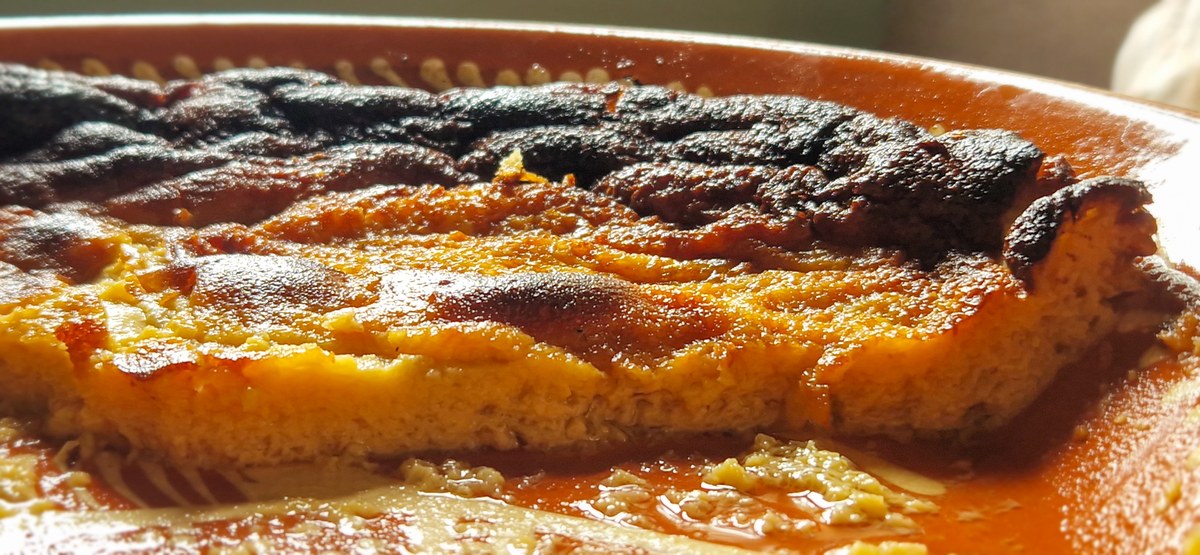
The oven has just given up its bread. The embers are pushed to the back, the vault holds a heat no hand goes near, and that is exactly the moment the caçoilos are waiting for: deep earthenware dishes, dark outside, pale yellow within. They go into the oven empty. Then the batter is poured in, all at once. The thermal shock does the rest.
The dessert is called tigelada. The name comes from tigela, the bowl — except that in the Beira Baixa it is precisely not baked in a bowl. That nuance is what sets it apart from every other tigelada in Portugal, and it is also what explains its taste.
A dessert that waits its turn
Picture the geography of a Portuguese village before kitchen stoves. The bread oven was not a domestic thing: it belonged to everyone. One brick mouth for the whole hamlet, lit early, heated for hours, with an unspoken queue that organised the entire day.
Bread first, because bread is what justifies the firewood. Then, on feast days, the kid goat. And at the very end, when the oven is of no more use to a baker but far too hot to waste, the dishes of tigelada made their entrance. The residual heat of a wood oven falls away slowly, very slowly: that is exactly the curve a mixture of eggs and milk needs in order to set without ever boiling. A bake that could run close to three hours.
Put differently: tigelada did not come from a recipe. It came from a time slot — the one the village oven left free.
Earthenware, never porcelain
The dish is not folklore. Porous clay heats up slowly, then gives that heat back continuously, through the base and through the walls. So the dessert sets from the outside in: a thin brown crust on top, a centre that stays creamy.
The cooks of the Beira Baixa went one step further: they heated the caçoilos empty before pouring in the mixture. Cold batter meets a scorching wall, the surface catches immediately, and the rest goes on cooking gently underneath. That is a piece of handiwork, not a modern trick — and it is lost the moment you swap clay for metal.
Eggs, goat's milk, honey
The list is short: eggs, goat's milk, brown sugar, honey, lemon zest, a little flour, cinnamon, a pinch of salt. Nothing else. As so often in Portuguese pastry, the richness comes not from the number of ingredients but from where they come from.
- Goat's milk: because this is goat country. It brings a clean acidity cow's milk does not have, and it keeps the dessert from falling into flat sweetness.
- Honey: the most characteristic version, the tigelada de mel, makes it a central ingredient. The hives of the area work heather, broom and wild rosemary: the honey is dark, almost resinous.
- Cinnamon and lemon: the pair that runs through the whole of Portuguese doçaria, from rice pudding to leite-creme.
Proença-a-Nova, the hives and the romarias
Tigelada is the emblematic sweet of Proença-a-Nova, in the Pinhal Interior Sul, in central Portugal. Its birth is placed in the south of the municipality, where climate and vegetation favoured beehives, hardly a coincidence in a dessert built around honey.
It is eaten all year, but it belongs first of all to celebration: the romarias, those village pilgrimages that double as a fair, and the long family tables. The calendar followed the hives: the first honey harvests come in early summer, and the dessert arrives with them. Late August, in the thick of the romaria season, is when you are most likely to meet it.
Today tigelada sits among the traditional Portuguese products catalogued by the agricultural administration, with its own entry, its territory and its caçoilos. A quiet recognition, much like the dessert: nothing spectacular, a brown surface, and all the work on the inside.
What it shares with our counter
We do not make tigelada at Wooly — it is a dessert of communal ovens, not of display cases. But the whole family it belongs to is there, in our Brussels shops: the same egg custard that sets in the oven and browns on top is the one in the pastel de nata; the same milk-lemon-cinnamon trio is the one in leite-creme and arroz doce. On Rue des Tongres in Etterbeek, in Stockel, in Uccle or in Waterloo, ask us where the cinnamon comes from and we will start talking about the Beira Baixa without any prompting. All our addresses are here.
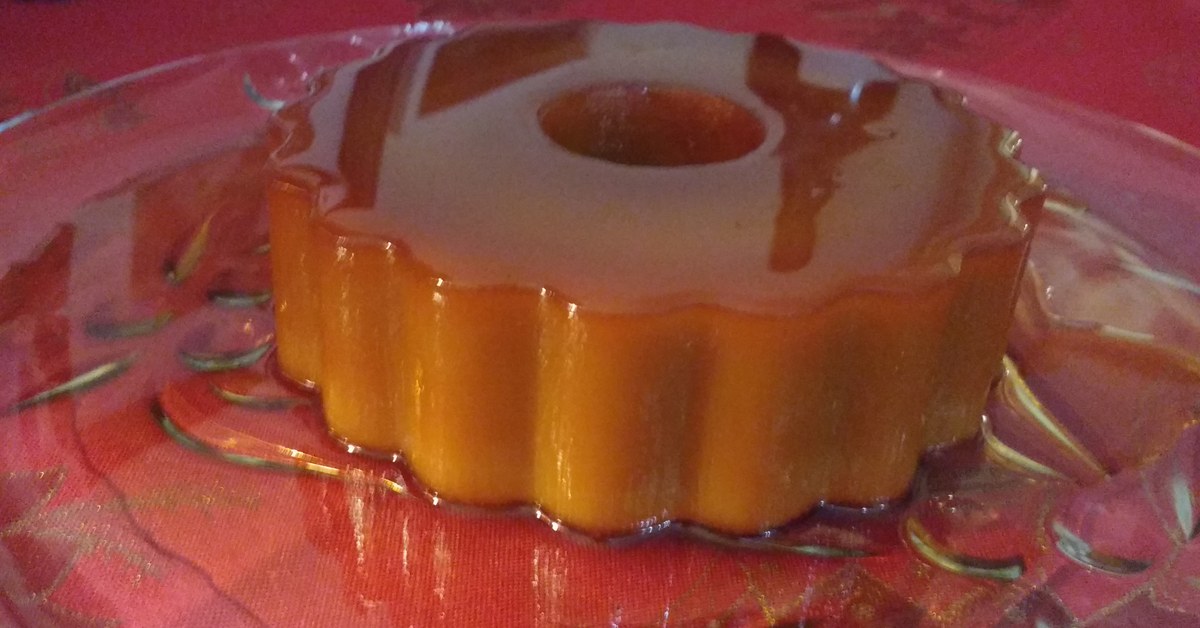
Photo: Luís Tinoco Azevedo, via Wikimedia Commons, licence CC BY-SA 4.0.
Read next
Brisas do Lis: the Leiria cake that had to change its name
They were called the little kisses of the Lis, until the jokes at the counter forced Leiria to find another name. The…
Ceylon cinnamon: the bark the Portuguese found by accident
On a pastel de nata that is still warm, it comes last, in a gesture lasting one second. Yet this brown powder has…
Alfarroba: the Algarve's black gold, harvested with a long pole
In late August, in the hills behind the Algarve coast, you hear it long before you see anything: a dry, repeated…
Papos de anjo: the egg-yolk cake that is cooked twice
It leaves the oven baked, golden and domed — and yet the work is not finished. The papo de anjo goes straight into a…
Jesuíta: the crackling triangle Santo Tirso guards so fiercely
Some pastries announce themselves by sound. The jesuíta of Santo Tirso starts with a thin crust of sugar that gives way…
Pastel de Chaves: the recipe bought from a stranger in 1862
A half-moon of puff pastry, a veal filling, and a recipe bought for one pound from a street seller whose name nobody…
Leite-creme: the red-hot iron that cracks Portuguese custard
You hear it before you taste it: the spoon presses, the sugar crust gives way with a dry crack, and underneath there is…
Pudim Abade de Priscos: the Portuguese pudding with no milk
A dark, dense Portuguese pudding born in a presbytery near Braga, whose original recipe contains not a drop of milk.…
Find our artisan pastries in our Brussels stores or order online.
Order now Our foodtruck for your events Our stores